How I Shop
So you’ve seen what I spend. Now you’re probably wondering how to try any of this without turning grocery shopping into a second job.
Here’s the good news: you don’t have to do everything I do. Pick a strategy or two. See whether they make your life easier, your meals better, or your grocery bill smaller. Keep what works and forget the rest. This is practical living, not the deprivation Olympics.
1. BUILD A PANTRY A LITTLE AT A TIME
If pasta or canned corn is on a good sale and I know I’ll use it, I buy an extra. It doesn’t matter whether it’s on this week’s menu. The point is to build a reserve gradually so I’m not forced to pay today’s price every time I want to cook.
2. LOOK AT THE SALES BEFORE DECIDING ON DINNER
I often build a meal around the bargain, not the other way around. Italian meatballs on sale? I’ve got pasta and Parmesan. Grab some marinara while there and dinner’s handled.
3. HAVE A “LET'S GO FIND A DEAL” DAY
Sometimes I go shopping just to check markdowns. I may be out of coffee creamer and the trip turns into bargain hunting. I only buy something if it’s genuinely useful and the price really is good.
4. MAKE MEAT AN INGREDIENT, NOT THE STAR
One small chicken breast can go into a pot pie. Half a pound of ground pork can help feed a family when beans, corn, vegetables, and cornbread join the party. Stretching meat doesn’t mean serving sad little plates.
5. LET VEGETABLES, BEANS, RICE, AND PASTA DO SOME WORK
Fried rice, soups, stews, and pasta with lots of vegetables are satisfying meals, not consolation prizes. Beans add protein and substance. A little leftover meat or cheese can flavor the whole dish.
6. USE WHAT'S ALREADY IN YOUR KITCHEN
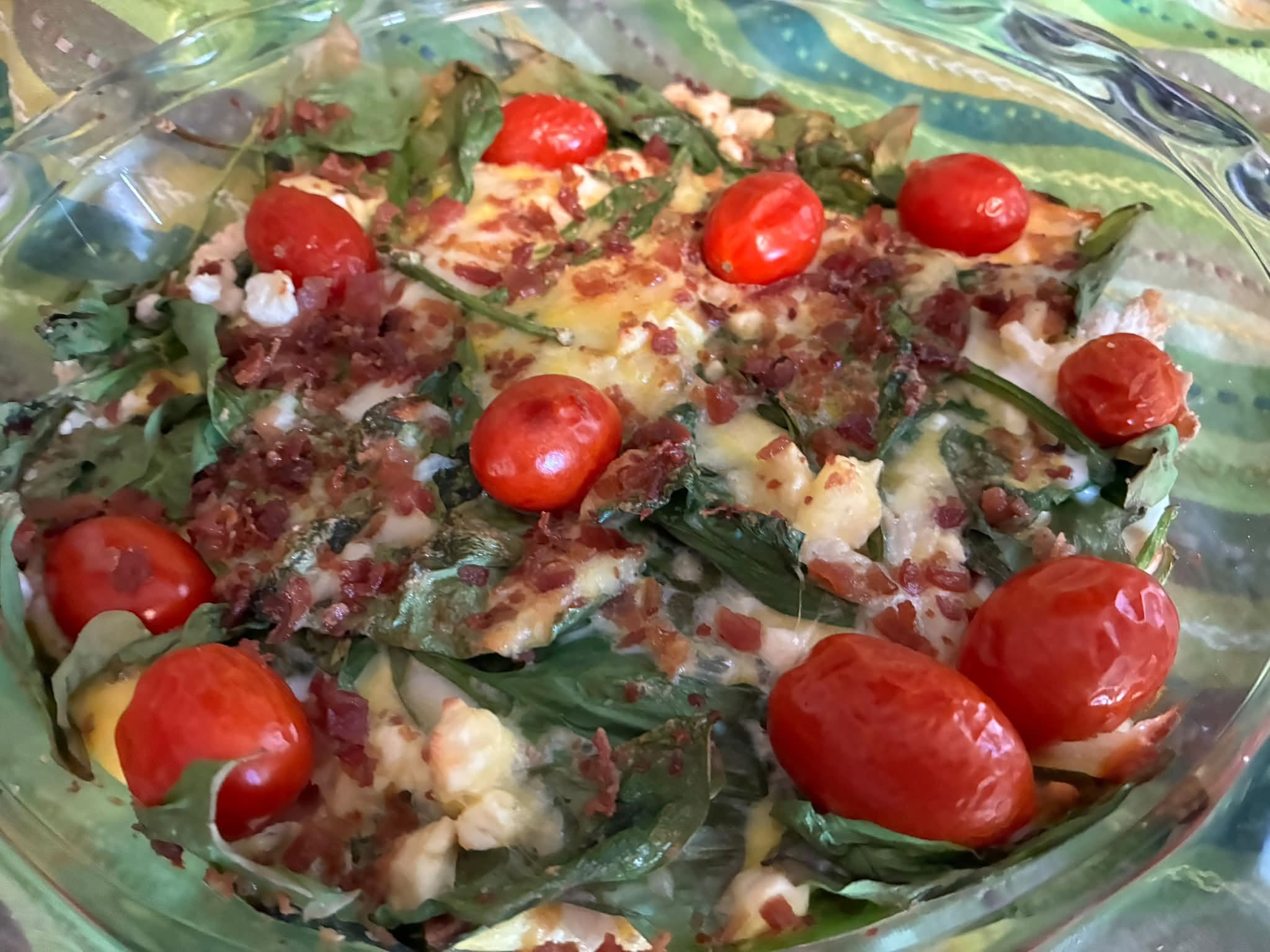
Bread heels, almost-finished cheeses, wilting spinach and tired tomatoes aren’t trash; they’re ingredients. I turn them into another meal, like the tomato and spinach strata in the photo. My Poor Man’s Quiche and Garden Variety Pie work the same way. Layer what’s left instead of making it complicated.
7. QUESTION YOUR BRAND LOYALTIES
As I discovered with my coffee, sometimes we’re so loyal to a brand that we never question whether there’s something better — or less expensive. Switching my brand saved me an estimated $175–$221 a year!
Try an alternative once. If you don’t like it, go back to your favorite. But you might be pleasantly surprised.
8. DON'T JUDGE A STORE BY ITS REPUTATION
In the Roaring Fork Valley of Colorado, I met people who assumed Dollar Tree sold nothing but junk. I had to persuade a few of them to go inside. Why pay more for an equivalent household item somewhere else just because the store seems fancier?
9. COMPARE VALUE, NOT JUST PRICE TAGS
Look at cost per ounce, sheet, foot, serving, or use. For garbage bags, thickness and strength matter. For foil, check how much is on the roll. A smaller package may cost less today but more for the amount you’re getting. And sometimes the smaller package is still the right choice if it prevents waste.
10. SUBSTITUTE WHEN IT DOESN'T SPOIL THE RESULT
When I lived in Honolulu around 2000, a gallon of cow’s milk cost about $8. With two young children, I switched to plant-based milks, such as soy or almond, for suitable uses. We adapted, and I learned to cook without relying on cow’s milk.
Prices and available products change wherever you live, but the principle still applies: find a substitution that works for you.
Cottage cheese can stand in for ricotta in lasagna. No canned cream soup for pot pie? Bouillon, water, and cornstarch can make a quick sauce. Substitutions are options, not punishments.
I won’t pay top dollar for olive oil just because I’m running low. I can use vegetable or canola oil for suitable recipes while I wait for a better deal.
The same goes for the marjoram I am currently waiting to find at a reasonable price. I call it “stubbornness of the wallet.” I can change dinner while I wait.
Seasonings make this easier. The same inexpensive chicken, vegetables, and rice can head toward Mexican, Greek, or Chinese flavors with a few changes. Learning those combinations gives me more choices without a cupboard full of ingredients I will use once.
11. PAY FOR CONVENIENCE WHEN IT'S WORTH IT
I use store-bought pie crusts. Sometimes I buy ready rice, salad kits, or other shortcuts. Saving money doesn’t require making everything from scratch. Having a stocked pantry is its own kind of convenience, and an occasional shortcut can keep dinner from becoming a chore.
12. COUNT YOUR TIME AND ENERGY, TOO
A bargain isn’t much use if the trip costs more in time, energy, or fuel than it saves. You don’t have to chase every sale.
13. BUY WHAT YOU'LL ACTUALLY USE
I don’t buy a food because it’s cheap if it will sit there until it expires. Stocking up is only useful when you have storage, a realistic plan to use the product, and the money to spare. And while I care about price, I also choose not to shop at certain large retailers because of my values. Savings matter, but they’re not my only consideration.
14. BUY THE FAMILY PACK WHEN THE MATH WORKS
A family pack is useful if the price per pound is better and I have room for it. I divide the meat into portions and freeze what I will not use soon. The size of the package does not have to determine the size of dinner.
15. MAKE ROUND 2 MEALS
Almost all the meat purchases in my receipt review were either divided and partly frozen, or cooked and turned into a different dish a day or two later. Cooked chicken can become pot pie; part of a pork roast can become Gringo Pie. A different sauce, seasoning, or combination of vegetables gives the ingredients another dinner to do.
16. LEAVE ROOM FOR SOMETHING YOU ENJOY
An occasional indulgence belongs in the decision, too. I can choose the treat, the shortcut, or the dinner out that is worth it to me. The point of saving on things that do not matter much is having more room for things that do. This is about frugality without deprivation.
START WITH ONE CHANGE
You don’t need to use every strategy at once. Pick one approach, get comfortable with it, and add others over time. The goal is a system that feels steady and doable in your life.
Next: Make shopping fit your life
Build a shopping path around what you actually buy.