How the Heck Do You Do It?
My friend Eve keeps asking me the same question: “How the heck do you do it?”
(Eve didn’t know she was going to become the star of this article. Hi Eve!)
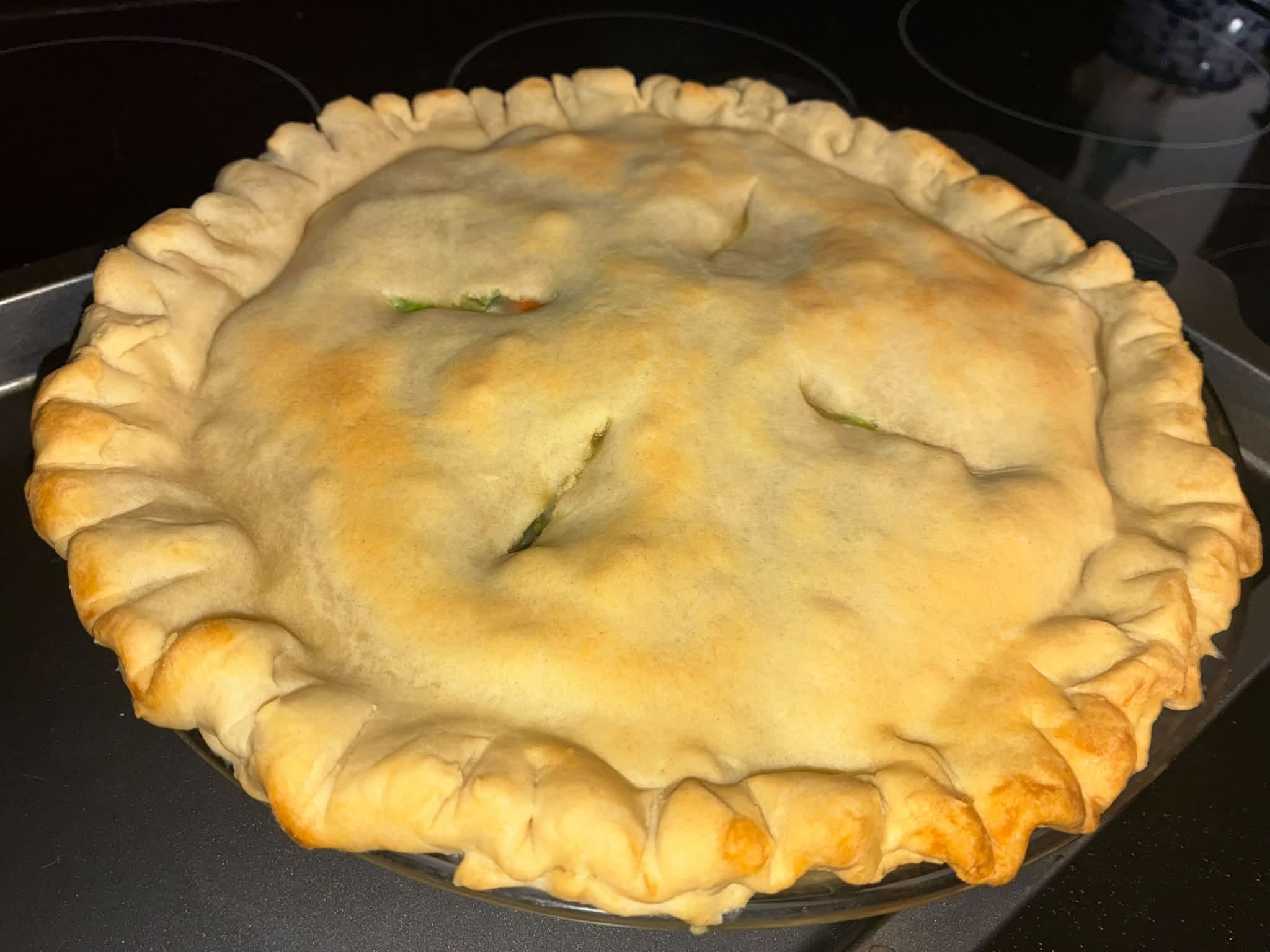
She’s talking about the grocery bill. I feed two adults, and my food and household purchases have often come in under $200 a month, not counting pet supplies or alcohol.
I don’t live on only rice and beans. There are fresh and frozen fruits, vegetables, cheese, coffee, easy dinners, and yes, convenience foods in my kitchen. I buy ready rice sometimes. I’ve been known to bring home a pizza. This isn’t the deprivation Olympics.
So here’s a look at the numbers — and what a grocery receipt doesn’t tell you.
But ... “THERE'S NOTHING TO EAT”
In June 2024, I posted a photo of my Aldi cart and asked friends to guess the total. Eve guessed $115. The receipt was $59.75 for 23 items, including a 12-pack of soda that wasn’t in the picture.
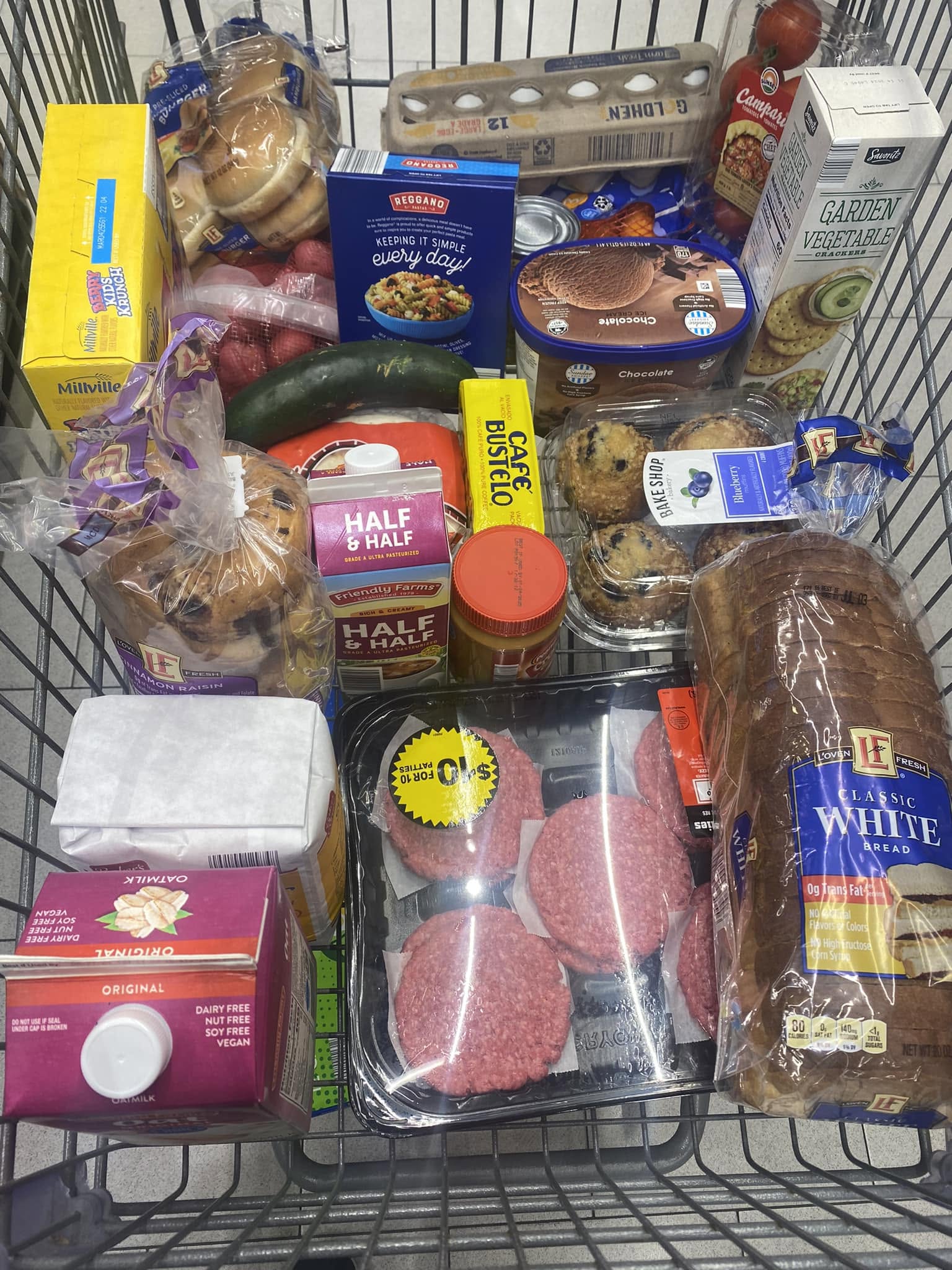
One response after the reveal was, “That’s pretty good! Except there’s nothing to eat.”
That’s the other half of this conversation. I see ingredients and possibilities. Someone else sees a cart without dinner.
TODAY'S SHOPPING ISN'T JUST TONIGHT'S DINNER
I shop for necessities and opportunities, not just a week’s menu. If canned corn or pasta is a genuine bargain, I buy it today and use it months from now. Over time, that builds a kitchen full of options.
Some shopping trips are bigger because I’m stocking up. Some weeks I barely need anything besides coffee creamer.
Sometimes I go to the store just to hunt mark downs. Other times I need one thing, take a look around, and find deals. I don’t bring something home just because it’s cheap. I avoid impulse buys, and purchase food I know I can make something with.
I PLAN DINNERS BACKWARD
If Italian meatballs are on sale, I check what I’ve already got. Pasta in the cupboard? Great. Maybe I need marinara and a little Parmesan. There’s dinner.
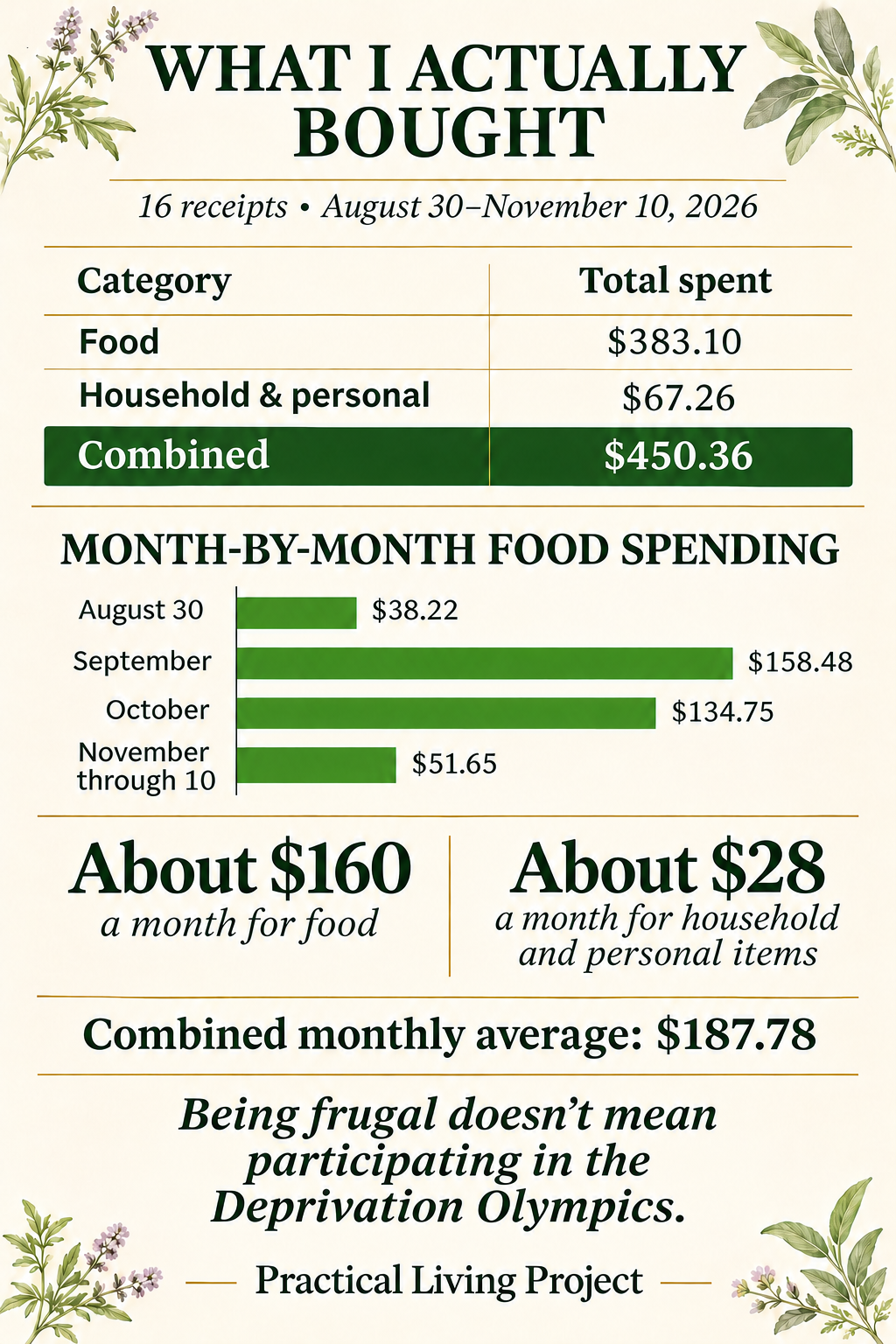
Almost all meat purchases are divided and portioned to freeze or cook. The portions are used to make multiple dishes. Meat doesn’t have to be the star of every plate. A small portion can become a pot pie, enchilada pie, soup, fried rice, or pasta dinner when you give the other ingredients some room to work. Vegetables, beans, grains, pasta, sauce, and a topping help turn the meat into a meal. That’s how one purchase contributes to several dinners.
I don’t decide on an elaborate meal and then pay full price for every ingredient on the list. I start with what’s available at a good price and what I already have, then decide what to make.
IT HAS TO WORK FOR MY LIFE
I’m flexible about brands and stores, too. A good example would be my coffee.
For about 25 years, Café Bustelo was my favorite coffee. I was loyal to it, and I put real effort into buying it at a decent price. Aldi didn’t carry it, and the price at Food Lion was often higher than at Walgreens. So I’d check prices and buy Bustelo at Walgreens, Food Lion, or sometimes the commissary. I wasn’t necessarily making a trip just for coffee, but I was planning where to buy it around that one brand.
Then my son suggested I try Aldi’s Café El Morro. At first, it felt like giving something up. I’d drunk Bustelo for 25 years, I liked it, and I didn’t see much reason to change.
But I gave El Morro a try. And here’s the funny part: I liked it better.
Not just ‘good enough for the price.’ Better.
My November 10 Aldi receipt shows $3.65 for an 8.8-ounce package of Café El Morro. When I compared equal amounts of coffee against the regular Café Bustelo prices we’d found — $7.99 for 10 ounces at Kroger and $8.99 for 10 ounces at Walgreens — the estimated savings came to roughly $175 to $221 a year at about a package a week. Those are comparisons based on the prices checked then, not a promise of what either store charges today.
For years, I’d been comparing prices to get the best deal on the brand I already loved. What I hadn’t questioned was the brand itself.
That doesn’t mean you should always buy the cheapest option. It means that sometimes it’s worth trying something different. You might save money and discover you weren’t giving anything up at all.
I’ve been a city girl, lived in the inner city and in affluent communities, and made homes in very different places — from Honolulu and Long Island to the mountains outside Aspen, Colorado, and now a multicultural neighborhood in Norfolk, Virginia.
The surroundings change. The prices change. What’s available locally changes. But I’ve found that the same practical habits can make a difference everywhere: knowing what to buy, how to make a good meal from ordinary ingredients, when to spend a little more, and how to avoid wasting what you’ve worked hard to earn.
I’m not asking anyone to live exactly the way I do. I’m sharing things I’ve learned from actually living in these different places, so other people can adapt what works for them. Good food, comfort, and a little enjoyment shouldn’t be luxuries reserved for people with money to spare.
SO HOW THE HECK DO I DO IT?
I employ strategies, while leaving room for convenience and things I enjoy!
Some of it takes practice. You don’t have to learn it all at once.
If you’re thinking, “Okay, but where do I even start?” read “How I Shop: The Strategies Behind My Grocery Bill.” Pick a couple of ideas that might fit your life and try them. Toss out what doesn’t work in your life.
Next: See how I shop
The decisions that make those grocery bills possible.